Men in Lancaster tend to arrive at the receding-hairline conversation in one of two ways: slowly, over years of slightly different photographs, or all at once, the day a barber holds the mirror at an unkind angle. Either way, the useful question is not how to get the old hairline back. It is which style, among the real options, suits how far things have gone and how much daily effort you will actually spend.
That is a comparison, so here it is as one, with the tradeoffs stated plainly instead of sold.
The principle behind every option that works
Recession becomes obvious through contrast: thin or bare areas next to full ones, and long strands lying over scalp they cannot cover. Every style that works reduces contrast somehow. Shorter hair reduces it by making coverage even. Texture reduces it by breaking up the surface so the eye reads hair, not scalp. A buzz removes it entirely. Every style that fails does the opposite, usually by growing thin hair longer in the hope that length equals coverage. It does not. Length on thinning hair separates, clumps, and shows more scalp than the same hair cut half as long.
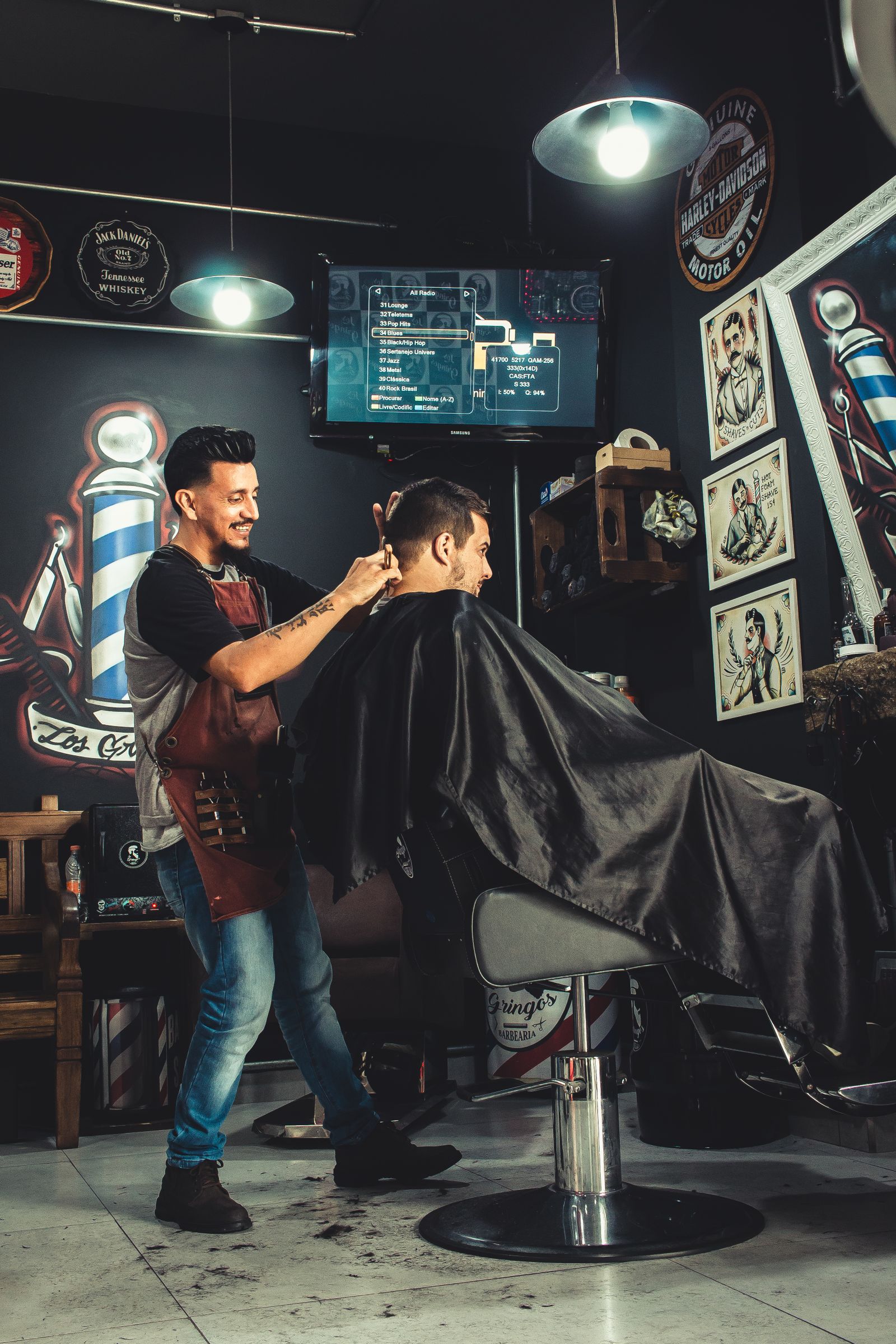
The real options, compared
| Style | How it handles recession | Daily effort | Best stage |
|---|---|---|---|
| Textured crop, short on top | Short, choppy texture breaks up the surface and covers evenly; front kept short and natural | Low: a little matte product, or none | Early to moderate recession, temples moving back |
| Short taper or fade, longer than a buzz on top | Short sides balance the top and make the shape read as one decision | Low to moderate | Early to moderate, especially with full sides making the top look thinner |
| Buzz cut, even length | Removes contrast entirely; the hairline stops being a feature | Minimal | Moderate to advanced, or any stage for men who want the question settled |
| Shaved head | No hair, no contrast, nothing to arrange | Low, but regular shaving and scalp sun care | Advanced, or as the final step after a buzz proves the look suits you |
| Longer top, swept forward or to the side | Attempts coverage with length | High, and unreliable in wind or humidity | Rarely the honest answer beyond the earliest stage; most men outgrow it |
Choosing by stage, not by hope
Early recession, where the temples have moved but the top still has real density, gives you the widest menu. A textured crop handles it for years in many cases. Moderate recession, where the front and crown are both thinning and starting to meet in bright light, narrows things: shorter becomes better, and styles need the sides taken in to keep proportion. Advanced recession is where men lose the most time, maintaining an arrangement over hair that can no longer carry it. The buzz at that stage is not a white flag. It is the first style in years that looks the same at 6 p.m. as it did at 8 a.m.
A useful test at home: look at your hair dry, in plain daylight, styled the way you actually wear it, not arranged for the mirror. That is the version the world sees, and the stage it shows is the one to cut for.

What a barber can and cannot do about the loss itself
A barber's tools are length, contrast, and texture. Questions about slowing or treating hair loss belong to a doctor or dermatologist, who can talk through the medical options and their limits. What the chair offers is a style that respects the facts. At Cutting Edge Barbershop & Beauty Salon, asking for that honest read, and which row of the table above you are in, is a normal conversation. Barbers have it every week, and they would rather have it with you early than watch a style fail slowly over two years of appointments.
Bring it up before you think you need to
The best time to adjust a style for recession is while the adjustment is still small: a little shorter here, a little more texture there, barely noticeable from one cut to the next. Men who make those small moves early never face a dramatic change, because their style ages with their hairline instead of falling behind it. That is worth asking about at any appointment, even when you are mostly happy with your current cut.
Common questions
Which style hides a receding hairline best?
For most men, a short textured crop at early stages and a buzz cut at later ones. Both work by evening out coverage instead of trying to cover bare areas with length.
Does a fade help or hurt a receding hairline?
It usually helps. Taking the sides short balances the top and removes the full-versus-thin contrast that makes recession stand out.
When is it time to just buzz it?
When styling the top takes daily arranging and still looks thin by midday. Most men who make the switch say they waited longer than they needed to.
Photos in this guide are representative stock images.
← All guides from Cutting Edge Barbershop & Beauty Salon← Back to Cutting Edge Barbershop & Beauty Salon